Sunday, February 28, 2010

a night of parsnips and sherry

seattle has seen a few spring days so far, but the spring vegetables are a ways off yet. for now, the fridge is packed with root vegetables... a combination of parsnips, carrots, sunchokes, and beets. tonight's meal featured roasted parsnips (inspired by smitten kitchen) and sherried wild mushroom & sunchoke toasts.


parmesan parsnip sticks:
3 lbs parsnips, peeled and halved or quartered into equal sized sticks
2 egg whites
2-3 cups grated parmesan
fresh or dried oregano, chopped
black pepper & sea salt (i used red sea salt for some fun added color)

1 can chopped tomatoes
1 head of garlic, roasted in olive oil
fresh oregano
salt and pepper

beat eggs with your herbs in a large bowl. toss in your parsnip sticks, covering your parsnips with egg wash. individually role the parsnip sticks in the grated parmesan and place on a greased foil-lined baking sheet - leaving space between each parsnip. liberally salt and pepper your sheet of parsnips and bake in a 450 degree oven for about 20 minutes or until cheese is lightly browned and parsnips are fork tender.

in the mean time, bring tomatoes, tons of roasted garlic gloves with oil, herbs and salt and pepper in a small sauce pan until thickened. this makes a delicious and intensely garlicky dipping sauce for your parmesan parsnip sticks!

sherried wild mushrooms & sunchoke toasts:
2-3 cups mixed wild mushrooms (any variety)
1 cup sunchokes, peeled, halved & thinly sliced
2 tablespoons butter
2 tablespoons olive oil (i used some of the leftover oil from roasting garlic)
2 cloves roasted garlic smashed, or 1 raw clove diced
2 small shallots, thinly sliced
1/4 cups sherry
a spoon or two of brown sugar
white pepper
salt
goat cheese & mixed greens

in a large skillet or cast iron, melt butter and oil and begin to sautee mushrooms, sunchokes and shallots. the mushrooms will release water, but just keep cooking at a medium heat until the water cooks off. add in your garlic, salt and pepper after about 6-8 minutes and sautee until everything is nicely borwn (another 5 minutes or so). add in the sherry and cook until it evaporates. adding a spoonful of brown sugar creates an amazing and unusual taste that brings out the sherry on your toasts! but you may prefer less sweet mushrooms...

once browned, remove from heat and prep your toasts: brush thin slices of baguette with olive oil and broil lightly until browned on both sides. spread a layer of goat cheese on each toast, layered with mixed salad greens and a heaping pile of sherried mushrooms and sunchokes. pepper to taste. these are quite the fancy little appetizer!

Monday, February 22, 2010

a one woman kitchen

tucked away into a quaint residential block in ballard is the one of the most amazing kitchens in all of seattle: a caprice kitchen. the woman behind it all, chef anne catherine, rotates her menus weekly to feature exclusively local foods (save for the coffee and cocoa...) the kitchen also specializes in pairing each course with a local washington wine. the selection is inspiring.

a sampling from our family-style meal:
baguette with roasted garlic butter
(the butter won me over to this restaurant with the first bite).
roasted beets in a dill vinaigrette and local feta cheese.
roasted brussels sprouts and an oversized sunchoke-stuffed ravioli
with sorrel aioli.
pulled pork, braised in stout with honey roasted beets
(looked delicious - gorgeous color!)

and to finish, a brownie that we all voted to be the best brownie ever to melt in our mouths. the perfect crumb, dark cocoa, flakey and drizzled with a home-made caramel sauce. they had run out of local hazelnuts this evening, but made up for it with an extra large brownie slice that put full smiles on all three of our faces!

this two woman show - the chef and a gracious waitress - are such an impressing duo, treating seattle with a wealth of recipes to feature our local, deep foods. i'll be back again and again, hopefully for one of their special vineyard or farm feature dinners!

Friday, February 12, 2010

back to my granola girl roots

great granola doesn't have to come from a box or the bulk section. a medley of local oats and goodies make a delicious "locavore" granola to perk up my mornings!... organic wheat germ, rolled oats and spelt from bob's red mill (oregon) and fairhaven mill (washington). dried nectarines and asian pears from my neighborhood farmers market, preserved from last summer. and the star ingredient: local honey produced from a friend's bee-hives.


2 cup thick rolled oats
1 cup spelt flakes (rolled spelt)
1/2 cup raw wheat germ
1/2 teaspoon salt

1/2 cup (or less) honey
1/4 cup vegetable oil
2 tablespoons of water
1 teaspoon vanilla

extras:
spices (nutmeg or cinnamon)
nuts, raw or toasted - walnuts, pecans, hazelnuts, almonds
seeds, raw or toasted - pumpkin, sesame, sunflower
dried fruit, cut into pieces - raisins, pair, apple, cherry, blueberry

heat oven to 300 degrees and line a baking sheet or large roasting pan with parchment paper.
in a large bowl, combine dry ingredients and nuts and seeds if yours are raw. if you want to use toasted nuts and seeds, hold them to the side.
in a small sauce pan, heat oil, honey, water and vanilla. this makes it a lot easier to spread into your oat mixture. combine in the large bowl, using your hands to mix and form clusters. pour everything onto your lined baking pan and bake in the oven for about 45 minute (stirring every ten or fifteen minutes).
at this point, mix in all of your extras... dried fruit bits, toasted nuts or seeds, and return to the oven for another 20-30 minutes. *baking times may need to be adjusted depending on the size of the batch - go for golden brown!* baking the dried fruit will help to prevent you granola from getting soggy or stale when you store it with fruit mixed in. personally - i just bake my granola with nuts and seed and leave the dried fruit to be mixed in later with individual servings. what can i say - some days i'm craving granola with raisins and dried pears, other days i just want ripe banana slices mixed in!

Thursday, February 4, 2010

a meal without bar codes

(contributions from maria h.)

the goal of tonight's meal was to create a dinner using local foods. why local? if the environment is a concern - eating local is a great way for consumers to help protect the environment. local foods travel less distance and less energy is expended to get food to your table. if one is concerned about the local economy - buying local helps support local farmers and workers, giving them the opportunity to remain an independent farm and resisting industrialized agriculture companies who practice such methods as the use of pesticides and the use of genetically engineered foods. if taste is of concern - local foods is hands down going to be fresher and tastier too.

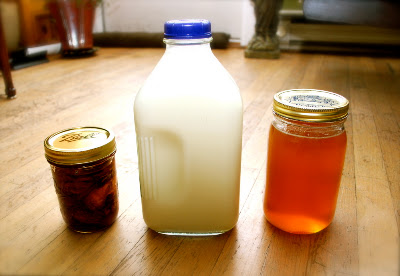
above: cream-top (unhomogenized) milk from golden glen creamery, sun-dried tomatoes preserved in oil from a lovely friend's garden - thank you francisca - along with some honey from the bees that she keeps in her yard (the honey, we decided, is being saved for a cooking project soon to come!)

the remainder of our ingredients were gathered from the farmers market, local bakeries, maria's herb pots, and foraged wild garlic. the delicious result...

a savory sun-dried tomato bread pudding:

1 loaf or 2 baguettes of stale bread, cut into 1 inch cubes
2 leeks, halved length wise, and sliced
1 shallot, thinly sliced
tons of roasted garlic, diced after roasting
2 cup sun-dried tomatoes packed in oil, drained - dice half of them, leaving the other half whole
3 cups milk
4 eggs
fresh thyme, parsley or rosemary, chopped
grated cheese - parmesan or gruyere cheese work nicely
lots of salt and pepper
butter for greasing pans


heat oven to 350 degrees. if your bread is not crispy-stale, toast the bread cubes in the oven for 10 or 15 minutes. in the mean time, saute leeks and shallots with oil for about 5 minutes (we used the extra oil drained from the sun-dried tomatoes.) grease ramekins or casserole dish with butter (local, grass-fed-cow butter that is...)

whisk together eggs and milk in a separate bowl. add in your chopped herbs, salt and pepper.

in a super large bowl, mix together bread cubes, sauteed vegetables, the diced tomatoes, roasted garlic, and half of your grated cheese. pour half the egg and milk mixture over your bread cubes and mix everything together with your hands.

transfer this mixture into your baking dishes and drizzle the rest of your egg/milk mixture on top (you want this to be very moist!). top with whole sun-dried tomatoes and sprinkle with the other half of the grated cheese. salt and pepper as you wish.

bake at 350 for about 35-45 minutes until browned and crisp on top, but moist on the bottom (may be shorter for small ramekins). we served our bread pudding not with chives, but with wild garlic foraged from near the burke gillman trail!

the salad on the side was an amazing combination of pickled peppers - jarred and brought to us by melisa - along with arugula, parsley, apples and olive oil. note to self - next summer, i will have to pickle some peppers like these!

Tuesday, February 2, 2010

the urban gleaner

(contributions from anna b.)


students from all fields of studies are actively participating in a food justice course at the uw. but there is so much more for us to learn about deep local food than from a class room. we needed to get outside, find real local food, and cook! here is the story of a few of us who ventured out with an pro forager to discover edible plants hiding around the uw campus...

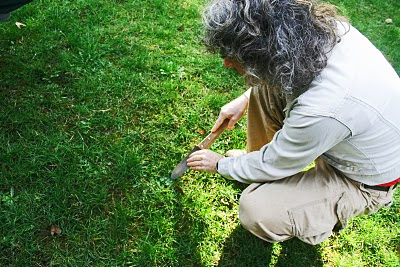
our guide, arthur jacobson
"there are many edible plants, but not all are worth eating. like beer - there may be many on tap, but not all are worth drinking" ... arthur guides us through the cream of the crop for foraged foods.

sweet violet stunningly lives up to its name

the first plant was the evergreen huckleberry. hidden under a mat of springy hair, plant expert arthur jacobson was explaining his color preference for its berries (take the blue ones over the black, any day). arthur, who has authored more than 330 articles and several books on wild plants in the Seattle region, had graciously agreed to take a group of us on a foraging tour around campus on a pleasantly sunny day in early february.


for two hours straight, Arthur helped us navigate through the wild world of weeds, pointing out everything from “stinky bob” to tall oregon grape. he identified numerous plants, including chickweed, miner’s lettuce, and fennel, that border the segment of the burke-gilman trail that is alongside the uw farm. he located raw garlic near the uw gym, warned us against foxglove (which closely resembles comfrey), and advised us on the best places to gather berries and hazelnuts in the coming months.

what you thought was just weeds, may be herbs - like fennel!

one notable observation from the trip was arthur’s insistence on practicality. a tree might produce berries with pits too large, a variety of weed might have a spine that complicates its preparation, or a tasty plant might just be too dinky. the focus on convenience extended to influence his gathering sites; arthur admitted that he doesn’t discriminate between cultivated or wild plants for his nightly pre-dinner collection. on a typical evening he will forage 20-30 different types of plants from around his neighborhood, but noted that he has made salads with upwards of 130 kinds just to prove that it’s possible. "like people who shop at the nearest grocery store, i mostly just forage close to my home." it's amazing what you can find when you know what to look for in an urban landscape... wild ginger, stinging nettles, wild carrot, dandelion flowers, sweet violet, vetch, berries, wild garlic...

the dark green leaves on this indian plum tree taste exactly like fresh cucumber - it's unmistakable